How Chronic Stress affects fat loss — And Why Training Harder Is Not the Answer

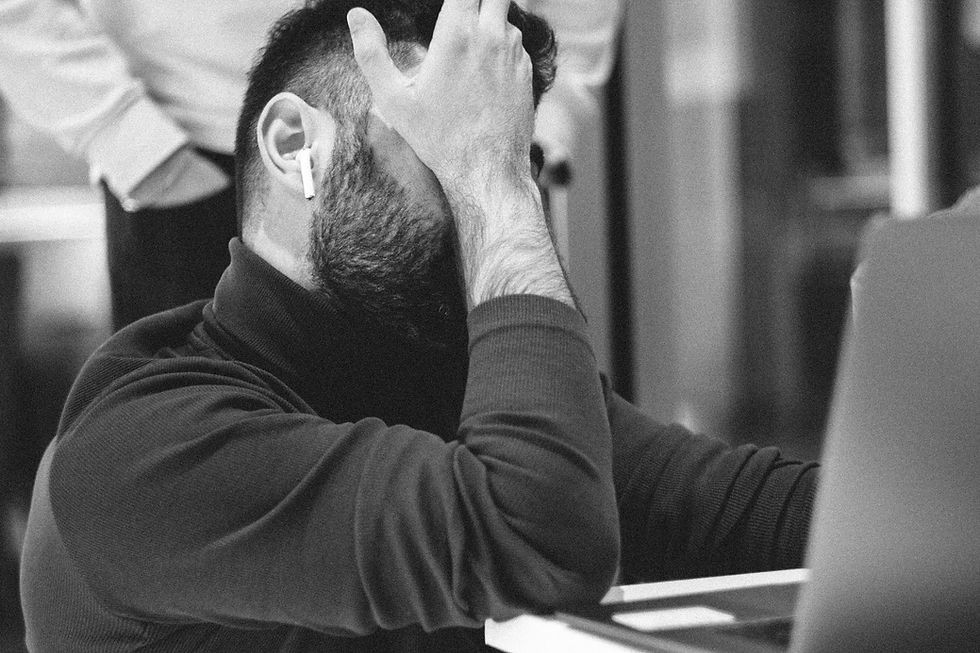
One of the first things I notice in chronically stressed people is that they have stopped feeling their own body.
They function all day, push through exhaustion, stay productive and disciplined and keep training. But the body has quietly stopped responding the way it once did.
Their breathing becomes shallow, posture slowly collapses and movements are performed but no longer truly experienced.
They eat less or follow a specific diet, train harder, stay consistent — and nothing changes.
The body feels constantly tired, tense and unresponsive. Fat loss stalls and building muscle becomes harder than it used to be. And the longer this goes on, the more they convince themselves they simply need to try harder.
In reality, the nervous system has been under pressure for far too long. And chronic stress not only affects fat loss but physically changes the body in ways that effort alone cannot override.

What Chronic Stress Actually Does to the Body
The human body is not designed for sustained, unrelenting stress. In short periods, stress serves a clear purpose: it sharpens focus, increases energy and prepares the body for action. But when the nervous system stays activated for weeks, months or years, the body begins to adapt to survival mode.
This adaptation is not a mental but a physiological state:
Cortisol levels remain chronically elevated.
Inflammation increases.
Sleep quality deteriorates.
Muscle tension builds throughout the body — in the jaw, the shoulders, the pelvic floor.
Breathing patterns change.
Digestion slows.
Recovery becomes significantly less efficient.
The body shifts from optimization to conservation. Instead of building, repairing and adapting, it begins to protect. And the more this state persists, the harder it becomes to change anything, no matter how much effort is applied.
Why Chronic Stress Makes Fat Loss and Muscle Growth More Difficult
This is where many people become genuinely frustrated, because they are doing everything right on paper, yet seeing no results.
Chronically elevated cortisol disrupts insulin sensitivity, promotes fat storage — particularly around the abdomen — and places the body in a catabolic state that works against muscle development.
Poor sleep further compounds this: growth hormone secretion is suppressed, appetite regulation is impaired and recovery is significantly reduced.
What I consistently observe is that the people who are pushing the hardest are often the ones making the least progress.
Because they are applying pressure to a system that is already overwhelmed.
Why Training Harder Can Sometimes Make Things Worse
The instinct, when the body stops responding, is to do more. It is a logical response to a problem that is not responding to logic.
But when the nervous system is already in a state of sympathetic dominance — constantly activated, never fully recovering — excessive training load can become an additional stressor rather than a stimulus for adaptation. The body interprets high-intensity effort as another threat in an already threatening environment.
What I also notice is that many people train exactly the way they live: rushed, disconnected, mentally elsewhere. They move through sessions the same way they move through their day — pushing through fatigue, performing movements without truly feeling them. Over time, training stops being something that reconnects them to their body and becomes another form of pressure the body has to absorb. This is often where progress stops completely and frustration takes over.
The Missing Piece - Body Awareness
What is consistently missing — and what rarely gets discussed in conventional fitness — is body awareness.
Body awareness is the ability to actually feel what is happening inside the body while it is happening.
To notice tension before it becomes chronic.
To sense fatigue before the body reaches collapse.
To feel where movement originates, how muscles engage, where posture breaks down — and how to correct it in real time.
Most chronically stressed people have lost this connection entirely. They are no longer present in their physical experience. They move, they train, they stretch but the internal signal has become very faint. The body is being managed rather than felt.
Body awareness is not a technique, it is a quality of attention. And when it is restored, something shifts that no external training plan can replicate: the body begins to feel safe enough to respond again.
This is where real change begins — not with more intensity, but with more presence. Doing the same movements slower, more consciously, with genuine attention to what is actually happening internally. In this state, training stops being something you push through. It becomes something you are genuinely in.
When this shift happens, I consistently see the same sequence of changes:
breathing deepens,
energy stabilises,
sleep becomes more restorative,
recovery accelerates
and the foundation for genuine longevity is restored.
And then — because the nervous system has shifted out of survival mode — body composition begins to change. Fat loss resumes and muscle responds again. The body that had been resistant for months starts moving in the right direction.
What This Means in Practice
Many people who feel stuck are not lazy or undisciplined. Their nervous system has simply been under sustained pressure for too long, and the body is no longer capable of responding to more of the same.
Real transformation in this state does not begin with intensity.
It begins with reconnection.
With learning to feel the body again rather than only manage it.
With enough to notice what is actually happening internally.
With shifting from performance to presence.
Training remains one of the most powerful tools available but only when it is used in a way that supports nervous system regulation, recovery and long-term longevity rather than adding to the load it is already carrying.
If you recognise yourself in this, then the approach to training most likely needs to change, not the effort itself.
In my work, I focus on rebuilding the connection between the nervous system and the body through movement quality, body awareness and regulated physical training.
This is available through private coaching sessions in Paphos, Cyprus, or online for clients anywhere in the world.


Comments